Boosting Your Podcast SEO with Accurate SRT Files

Podcast creators often focus heavily on titles, thumbnails, descriptions, and keywords when trying to grow on YouTube. But the actual spoken content of a podcast can also contain a huge amount of useful information.
A properly created SRT file can make that spoken content more accessible to viewers and easier to work with across different platforms.
An SRT file creator can automatically convert the dialogue from a podcast into timed subtitle text. Instead of manually creating the captions, AI can generate the first version and allow the creator to review it afterward.
This is where accurate transcription becomes important. A poorly transcribed podcast can contain incorrect names, technical terms, and phrases that make the resulting subtitles less useful. A good SRT generator should therefore be combined with an editor where mistakes can be checked before publishing.
The transcript can also be useful beyond subtitles. Creators can use the text to identify interesting sections of an episode, create descriptions, prepare articles, or find potential clips for social media.
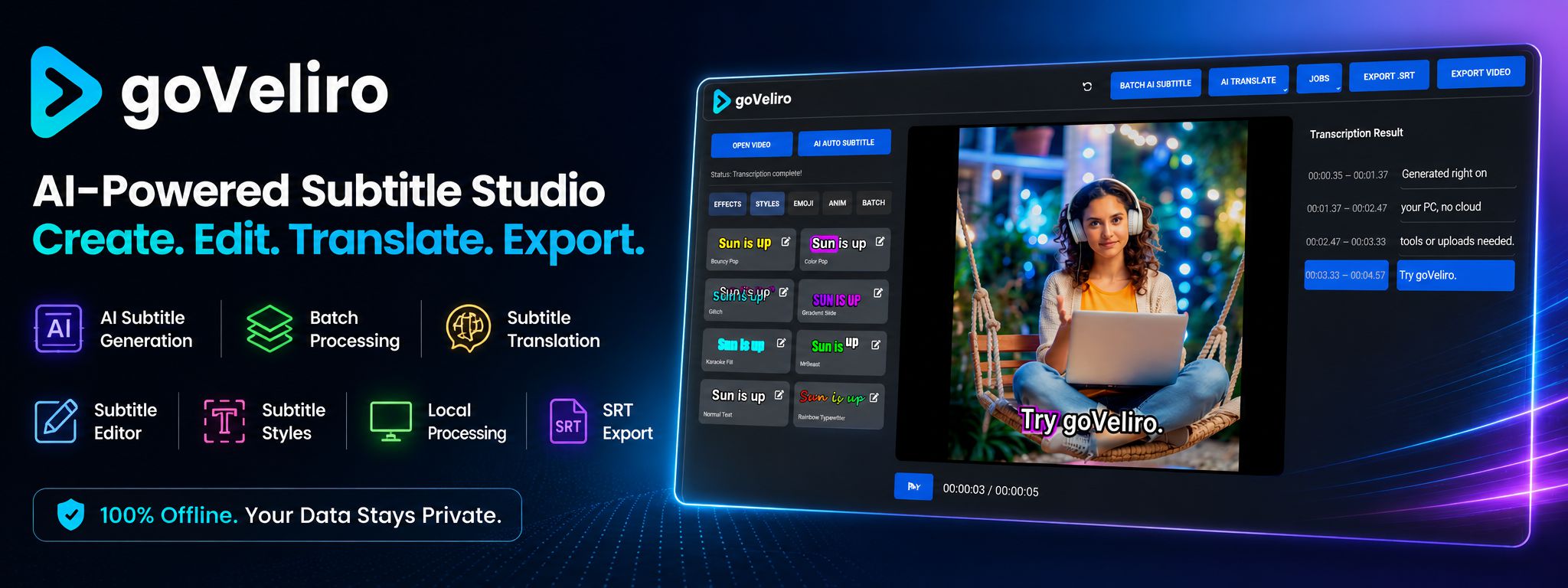
If you want to transcribe YouTube videos, a local transcription workflow can also be useful for videos you already have stored on your computer. You can create the transcript first and then turn it into an SRT file or use the text for other content.
For creators who publish frequently, a YouTube transcript generator can become part of a larger content workflow. One long podcast episode can provide subtitles, a searchable transcript, short-form video ideas, social media posts, and translated captions.
The important thing is that subtitles should be treated as more than text appearing at the bottom of a video. Accurate captions create a useful text version of the conversation that can be reused in many different ways.
For podcasters with a large archive, creating accurate SRT files can therefore be a relatively simple way to get more value from content that has already been produced.