The Ultimate Time-Saver for Video Podcasters
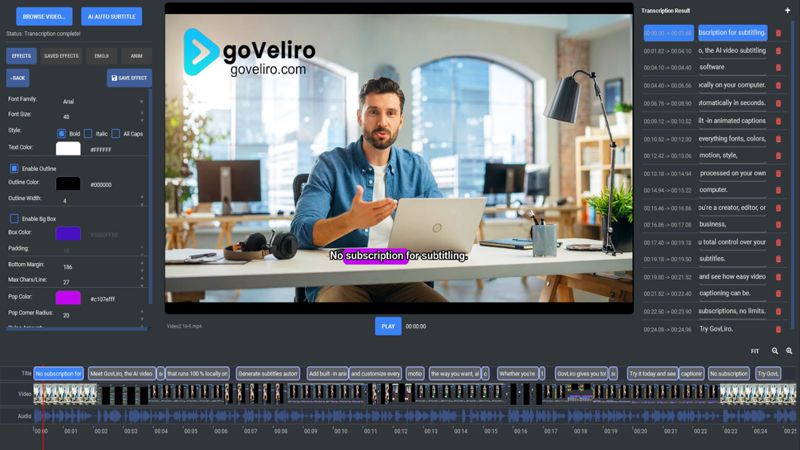
For video podcasters, subtitles have become an important part of the publishing workflow. They make long conversations easier to follow, improve accessibility, and can help content reach people who prefer watching with captions. The good news is that nobody needs to create podcast subtitles manually anymore. AI subtitle generators can transcribe an entire episode automatically.
The real question is which type of subtitle workflow makes the most sense for a podcast.
Online subtitle services are convenient, but they can become less attractive when you're dealing with long episodes on a regular basis. A one-hour podcast can represent a significant amount of video data that needs to be uploaded before the service can start processing it. If you publish several episodes every week, repeatedly uploading large video files can become a frustrating part of the workflow.
There is also the cost. Many online subtitle platforms work with monthly subscriptions or limits on the number of transcription minutes. For a podcaster who produces a lot of content, the amount of available minutes can become an important consideration. You may end up paying every month simply because you need to process your own growing library of episodes.
Privacy is another reason some creators prefer to keep their podcast files offline. A podcast may contain private interviews, unreleased episodes, client conversations, or other material that you don't necessarily want to upload to another company's servers.
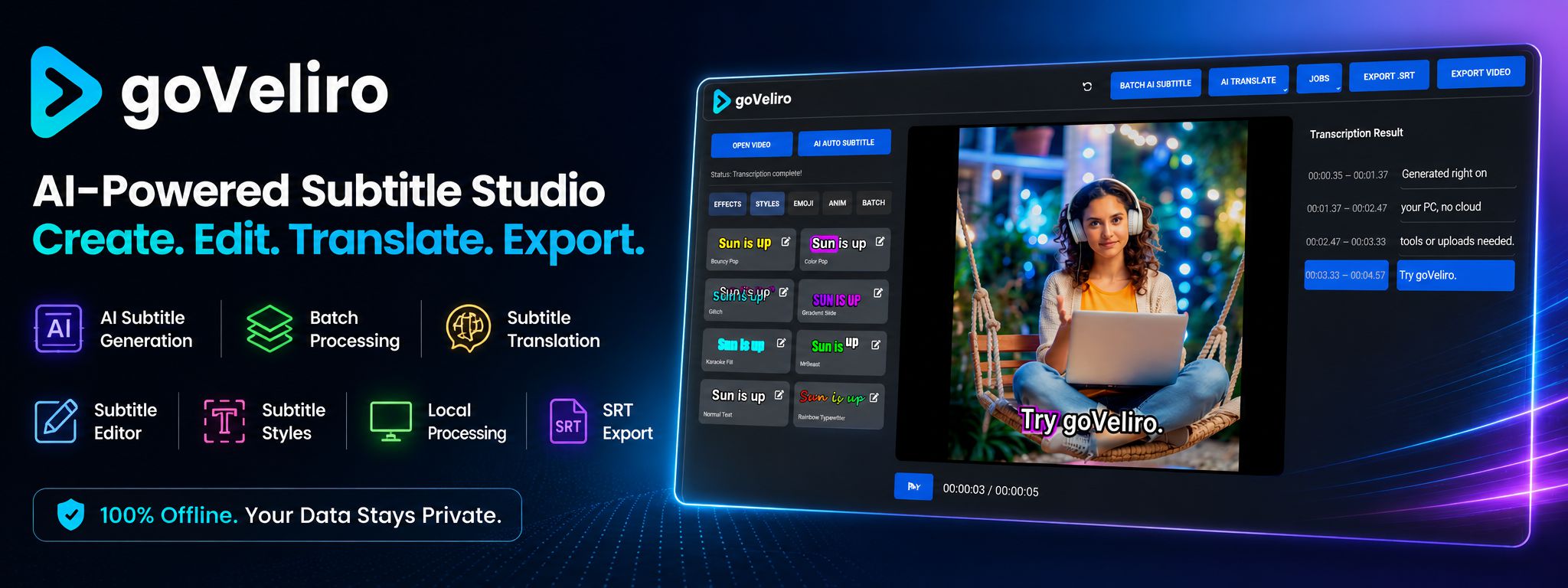
This is where an offline subtitle workflow can make a difference. With goVeliro Studio Subtitler, podcast videos can be transcribed directly on your own computer. The files stay on your machine while the AI generates the subtitles, so there is no need to upload large podcast videos to an online transcription service.
The workflow is also designed for creators who have more than one episode to process. Instead of adding each podcast video separately, multiple files can be selected and processed with the batch subtitle feature. This can be particularly useful when you have an existing podcast archive with dozens of episodes that you want to subtitle.
And subtitles don't have to stay in the original language. If you want to reach viewers in other countries, goVeliro can also help translate the generated subtitles into other languages. This makes it possible to take an existing podcast library and prepare it for a wider international audience without creating an entirely separate workflow for every language.
Another advantage of using a dedicated subtitle application is simplicity. You don't need to learn a complicated video editing workflow just to create captions. Add the podcast video, generate the subtitles, make any necessary corrections, and export the result. For multiple episodes, batch processing can handle the repetitive part for you.
For video podcasters, the biggest time saving doesn't come from replacing manual transcription—it comes from choosing a workflow that doesn't make you repeatedly upload, wait, and manage the same large files.
If you publish podcasts regularly, processing subtitles locally can be a simple way to make the publishing workflow faster, more private, and easier to manage.